

Prof. Dr. Atilla Yayla, İstanbul Medipol University
Israeli Prime Minister Benjamin Netanyahu has long praised the Israeli army as “the most moral army in the world.” This is not merely an ordinary propaganda slogan; it lies at the heart of the way the Israeli state presents itself to the world. The Israeli army’s official code of values also refers to principles such as “human life,” “responsibility,” “proportionality,” and “purity of arms.” On paper, this creates the impression of a military institution that places a high value on human life, uses force with great restraint, and takes special care to protect civilian life.
Yet the morality of states and armies is measured not by the texts they write about themselves, but by what they do. The real test of an army is not what is written in its ethical handbook, but how it behaves in the field. How does it treat civilians? How does it use force? Does it turn war into an excuse for suspending law altogether, or does it genuinely limit violence? This is where the Israeli army must be judged. And at that point, the picture that emerges is utterly incompatible with the claim of being “the most moral army in the world.”
What has happened in Gaza shows with complete clarity how false that claim is. International organizations, United Nations mechanisms, and human rights reports have documented that Israel’s military operations have led to “unprecedented” levels of civilian death, massive destruction, and large-scale displacement. In Gaza, homes, hospitals, schools, shelters, and the ordinary spaces of daily life have been systematically devastated. Not merely hundreds of thousands, but nearly the entire population has been displaced. People have been denied not only safety, but the very conditions of life itself. In the face of such a reality, to continue speaking of “morality” in connection with the Israeli army is to empty the concept of all meaning.
Morality Is Measured by the Limitation of Power
Morality, and especially the morality of war, begins precisely where power is restrained. Being armed, possessing military capability, or enjoying technological superiority does not make an army moral. On the contrary, it is the powerful who are expected to restrain themselves. Even in war, children, women, the elderly, the sick, and civilians in general must be protected. Hospitals, schools, and places of worship cannot be treated as ordinary targets of war. Morality is not merely grieving one’s own losses, but recognizing that the life of the innocent person on the other side also has value.
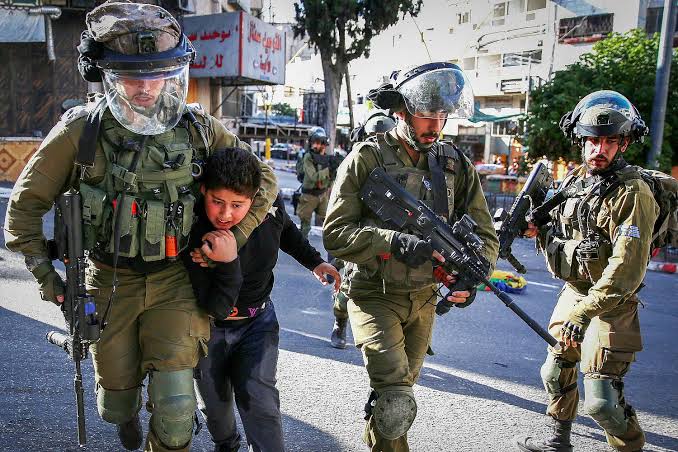
Yet the image Israel projects to the world is the exact opposite. Today, the Israeli army appears as a force that kills civilians on a mass scale, destroys the basic infrastructure of civilian life, and condemns people to hunger, thirst, homelessness, and insecurity. Moreover, all this is done while hiding behind concepts such as “security,” “counter-terrorism,” or “self-defense.” Morality is not a linguistic game designed to legitimize violence. An army does not become moral simply by calling itself a “defense force.” Just as a person does not become honest by calling himself honest, an army does not become moral by calling itself moral.
The Condition of the Israeli Army
The present condition of the Israeli army must be assessed not only through specific battlefield practices, but through its overall pattern of conduct. The problem goes beyond isolated excesses. There is a deeper, more structural issue here. What stands before us is an approach that does not place civilian life above military aims and, at times, seems to treat the destruction of civilian life as an ordinary side effect. For this reason, the matter is not about a few mistaken operations, a few reckless soldiers, or a handful of “tragic errors.” The problem is that an entire military and political approach relegates human life to a secondary position.
This has become especially evident in Gaza. The transformation of hospitals into targets, the destruction of the health system, the extraordinarily high number of children and women killed, and the fact that people have been driven into so-called safe zones only to encounter death there as well—all this tells us a great deal about the conduct of this army. If the actions of an army effectively erase the distinction between civilians and combatants, then one must speak not of morality, but of the suspension of morality itself.
The morality of an army is measured not by the intensity of its desire to win, but by the limits it places on itself in relation to human life. Judged by this standard, the conduct of the Israeli army does not support the claim of being the most moral army in the world. On the contrary, it points to a force that has become one of the most immoral.
The Israeli State and the Collapse of Law
Nor is the matter limited to the army alone. The Israeli state as a whole is increasingly turning into a structure that erodes law and suffocates the very idea of human rights. Detention centers, prisons, interrogation procedures, and the treatment of Palestinians have become a major field of shame. Torture, ill-treatment, degrading practices, and sexual violence are among the grave issues repeatedly raised by international bodies. The mistreatment of Palestinian children within the military detention system has likewise been documented for years.
All this shows that what we are dealing with is not merely a harsh security state. The problem is larger. What is being damaged here is the very idea of law itself. If law has any meaning at all, it is precisely that it limits vengeance at moments of greatest anger and fear. If law becomes nothing more than a tool for legitimizing the anger of the powerful, then what remains is not justice, but brute force.
This is why Israel’s detention, imprisonment, and punishment regime is as important as its military practices. The true moral level of a state is revealed not only in war, but in the way it treats those under its control. The treatment of the powerless, the defenseless, and the detained is one of the most important tests of morality. And on this test, Israel cannot be said to have succeeded.
The Death Penalty and the Politics of Revenge
The passage in March 2026 of a highly controversial measure in the Israeli parliament envisioning the death penalty for Palestinians in certain cases shows how dangerous the direction of this trajectory has become. The death penalty is already deeply problematic in modern legal thought. To revive it in the context of an intense political conflict, disputed judicial equality, and the operation of military courts is not a sign of justice, but of revenge.
The greatness of a state governed by law lies in its refusal to lose its sense of proportion even at moments of greatest anger. When the state turns itself into the pure representative of the victims’ rage, it begins to erase the distinction between justice and vengeance. This is what Israel is doing today. By turning execution into a political symbol, especially in relation to Palestinians, it transforms law from a universal guarantee into a discriminatory instrument of power.
Is Israel Protecting Civilization?
Israel often seeks to present itself as a state that “defends civilization,” “stands against barbarism,” and serves as an “outpost of Western values.” This rhetoric has had a certain effect in the Western world. But civilization is not merely technology, military strength, or diplomatic support. Civilization means being able to regard human life as universally valuable. Civilization means being able to defend not only the lives of one’s own children, but also those of others. Civilization means applying law not only to oneself, but also to one’s enemy.
Viewed from this perspective, Israel today is not defending civilization so much as destroying the very ground on which civilization rests. For the essence of civilization is not unrestrained power, but restrained power. The essence of civilization is not collective punishment, but individual responsibility. The essence of civilization is not the normalization of occupation and impunity, but the rule of law. If a state continually crushes civilian life, civilization is not simply to secure one’s own safety. To protect civilization is to bind power to law and morality. Israel today is moving in the opposite direction: It is seeking to free power from both law and morality.
Worse still, a significant part of the world either remains silent in the face of this reality or continues to repeat the fable of “the most moral army in the world.” Yet perhaps the real moral crisis begins precisely here. If, in the face of destruction on this scale, civilian slaughter on this scale, and impunity on this scale, we still cannot speak the truth clearly, then the problem lies not only in Tel Aviv, but in the moral order of the world as a whole.
In the end, the real issue is not how Israel describes itself. Calling its army “moral,” describing aggression as “defense,” or cloaking lawlessness in the language of “security” does not change reality. The reality is this: Judged by its deeds, the Israeli army is not “the most moral army in the world.” On the contrary, through its brutality toward civilians, its erosion of law, and its disregard for human life, it has become one of the most immoral armies in the world—perhaps the most one of all.