Ana Sayfa Blog Sayfa 202

Türkiye, bilimin sefaleti ve darbe

Türkiye büyük zahmetle yetiştirdiği pek çok cevheri Batı’ya kaptırmakla malul. Batı, dışarıdan aldığı “beyin göçü” ile dinamiklerini ayakta tutarken, biz ise hamaset edebiyatında boğuluyoruz.

Batı’da büyük başarı kazanan isimlerle (Halil İnalcık, Kemal Karpat, Oktay Sinanoğlu, Aziz Sancar vb.) ne kadar övünsek az ama neden aynı başarının burada gerçekleşmediği ve cevheri parlatanın biz olamadığı gerçeği ile de yüzleşmeliyiz.

Bugün üniversitelerimizde 21.958 profesör, 14.497 doçent, 34.196 yardımcı doçent, 21.008 öğretim görevlisi, 10.257 okutman, 45.383 araştırma görevlisi ve 6 milyondan fazla öğrencimiz var. (2015 rakamları)

***

Bu rakamlar bizi fazlasıyla heyecanlandırmalı ama etmiyor. Çünkü gerçekler hiç de öyle değil.

1981-2007 döneminde makale, derleme/inceleme ve not türünde yapılmış yayın sayılarına göre, Türkiye 45 ülke arasında 26’ncı sırada. Yayın sayısı 120.562, toplam atıf sayısı ise 548.547 olmuş.

Bu tabloda ABD, Japonya ve Almanya ilk üçte. ABD’nin yayın sayısı 6.634.586, atıf sayısı ise 197 milyondan fazla olmuş.

Thomson Reuters InCites veri tabanına dâhil olan ilk 50 üniversitemizin 2004-2014 bilimsel yayın performansı ise şöyle; yayın sayısı 228.856 ve toplam atıf sayısı 1.517.691. Türkiye gibi etnik, dini, kültürel çok ciddi problemlere sahip bir ülkede sosyal bilimler alanında yapılan çalışma sayısı ise bu tabloya göre 20.011.

Fakat asıl sorun bunca yayının belki abartı olacak ama %80’ine hemen hiç atıfta bulunulmaması. Bir yayına atıfta bulunulmaması demek o yayının ya öneminin farkına varılmadığı ya da hiçbir orijinal bilgi ve teze sahip olmadığı anlamına gelir.

***

Bugün, YÖK’ün ‘Ulusal Tez Merkezi’ üzerinden “Kürt” yazdığınızda karşınıza farklı alanlarda yapılmış 32 doktora(D) ve 191 yüksek lisans(YL); “Etnik” yazdığınızda 49 D, 162 YL; “Alevi” yazdığınızda 43 D ve 170 YL tezi ile karşılaşıyoruz. Hiç olmamasından iyidir ama 30-40 yıldır büyük bedeller ödediğimiz ve yıllardır çözmeye çalıştığımız bu tür konularda bugüne kadar binlerce çalışmanın yapılmış olması gerekmez miydi?

Buradan darbe girişimine gelirsek, Türkiye’nin neredeyse son 30 yılına damga vuran bir cemaatin dini bir yapıdan bir terör örgütüne evrilmesini ve darbeciliğe kadar gidebileceğini düne kadar (muhafazakar camiadan) hemen hiç kimsenin (Adem Çaylak ve birkaç kişi hariç) farketmemesi, üniversitelerimizde bu konuda şüphe izhar edebilen tek bir çalışmanın dahi yapılamamış olması ilginç değil mi?

Ya da tersinden soralım; birkaç sene öncesine kadar bunu fark edip yazıp, ifade edecekler, akademide nasıl bir muamele ile karşılaşırdı?

***

Bu nedenle üniversitelerimizin çetrefilli hiçbir konuda ciddi çalışma yap(a)maması üzerine düşünmemiz gerekiyor. Türkiye’yi geleceğe taşıyabilmek için eleştirel düşünce zeminini kuracak ve fikir özgürlüğünü sağlayacak adımların atılması gerek. Ve işe önce kafalarımızdaki duvarları yıkarak ve tartışılmayacak hiçbir konunun olamayacağı gerçeğini kabul ederek başlamamız gerekiyor.

Bizde neyin eksik olduğunun cevabı, bugün ABD’de MIT Koch laboratuvarında çalışan, önemli buluşları ile Harvard Üniversitesi tarafından “genç akademi üyeliğine” seçilen ilk Türk olan Yrd. Doç. Canan Dağdeviren’in Hürriyet’e verdiği söyleşide gizli;

“Burada yapabileceğim her şeyi ben aslında Türkiye’de de yapabilirim. Burada kullandığım malzemeler de aletler de Türkiye’de var. Türkiye’de olmayan tek şey kafa yapısı. Ben burada kendimi anlatmak zorunda değilim. Ama Türkiye’de yapmak istediğim şeyi insanlara kabul ettirmek zorundayım. Onları ikna etmek zorundayım. Ama bunun için vaktimiz yok. Her şey çok hızlı ilerliyor. Bizim bilimsel farkındalığı artırmamız lazım. Bilimle uğraşmak var olan bürokrasinin daha hızlı ilerlemesini sağlamayı gerektiriyor.”

NOT: Türk tarihçiliğinin büyük ustası Halil İnalcık Hocamızı saygı ve rahmetle anıyor, cümlemize başsağlığı diliyorum.

Karar Gazetesi, 27.07.2016

15 Temmuz Darbe Girişimi: İlk İzlenimler – Tanel Demirel

Türkiye, 15 Temmuz gecesi ciddi bir darbe teşebbüsünü savuşturdu. Türk halkı demokrasiye olan bağlılığını bir kez daha ama bu sefer daha önce hiç yapmadığı bir biçimde tanklara karşı sokaklara çıkarak gösterdi. Darbecilerin kimler olduğu konusunda çok net bir bilgimiz olmasa da,  var olan emarelerden yola çıkarak belli tespitler yapmak gerekiyor. Zira sular henüz durulmadı. Ne olup bittiği hakkında olabildiğince gerçekçi ve objektif değerlendirmelere ihtiyaç var.

Teşebbüs hiyerarşi dışı. Genelkurmay ve Kuvvet Komutanları hükümetin yanında yer aldılar. 2. Ordu Komutanı ile eski Hava Kuvvetleri Komutanı tutuklanmış olsalar da harekât, tuğgeneral/tuğamiral, tümgeneral/tümamiral rütbesinde olanlar tarafından planlanmış gibi gözüküyor. Gözaltına alınan askerlerin önemli bir çoğunluğu Jandarma, Hava Kuvvetleri ve Deniz Kuvvetleri’ne mensuplar. Kara Kuvvetleri’ndeki desteğin, diğer kuvvvetlere nazaran yetersiz kaldığı anlaşılıyor.

Darbe teşebbüsünde yer alan subayların neredeyse kırk yıldır kritik devlet kurumlarına sızmayı hedefleyen, Fethullah Gülen Cemaati’ne ya da yetkililerin tercih ettiği tanımla “Paralel Devlet Yapılanması”na (PDY) yakın oldukları konusundaki emareler çok açık.

Cemaate yakın isimlerin sosyal medya paylaşımları, Cemaat tarafından şeytanlaştırılan MİT ve Özel Harekat Daire Başkanlığı’nın en önemli hedef olarak seçilmesi, daha önce Cemaatçi yapılanmanın içinde olduğu söylenilen isimlerin, darbe başarılı olsaydı kritik görevlere getirilecek kişiler arasında sayılmaları iddiayı destekleyen bulgulardan sadece birkaçı. Son üç yıldır, bu yapılanmanın polis ve yargıda ne kadar güçlü olduğu ortaya çıkmıştı.

TSK içinde de güçlü oldukları tahmin ediliyordu. Bu iddialar şimdi doğrulanmış gibi görünüyor. Esasen, bu yapılanmaya yönelik ağustos ayı içindeki Yüksek Askeri Şura (YAŞ) toplantısında büyük bir tasfiye bekleniyordu. Askeri Casusluk Davası İddianamesi’nde adı geçen muvazzaf subayların YAŞ toplantısı beklenmeden gözaltına alınacağına dair söylentiler de duyulmuştu. Darbecilerin bu toplantıdan önce şanslarını denemek istediklerini söylemek yanlış olmaz. Zira tasfiye gerçekleşmiş olsaydı fazlaca bir şansları kalmayacaktı.

Bu yapılanma içinde olmamakla birlikte harekata katılmayı farklı saiklerle kabul etmiş subayların olması ihtimalini de bir kenara atamayız. Maalesef, darbeyi bir suç olarak görmeyen zihniyet tam anlamıyla tasfiye edilmemiştir.

Tersine, son tahlilde sivil otoriteye karşı rejimin bekçisi ordu anlayışının görünenden daha yaygın olduğu anlaşılıyor. Bu zihniyetin varlığı, kişisel kariyer hesapları ile AK Parti hükümetlerine yönelik hoşnutsuzluk ile beslendiğinde darbeci çekirdeğe destek vermeye hazır bir grubun var olması ihtimalini artırmıştır. Eğer varsa bu grup mensuplarının, darbe sonrasında Gülenciler ile hesaplaşmayı düşündüklerini ve giriştikleri ittifakın ortak düşmana karşı yapıldığını düşünerek kendi konumlarını meşrulaştırdıkları söylenebilir.

Teşebbüs bastırıldıktan sonra darbecilerin başarı şansının çok düşük olduğu iddiaları dile getirildi. Burada dikkatli olmak lazım. Bu çıkarımı ancak teşebbüsün başarısız olduğu bilgisine sahip olduktan sonra yapıyoruz. 15 Temmuz gecesi bunu söylemek kolay değildi.

Darbecilerin toplumsal ve siyasal desteğinin güçlü olmadığının ortaya çıktığı söylenebilirse de bunun darbeciler tarafından hesaplanmadığını düşünmek doğru olmaz.Darbeci çekirdek siyasetçiler ve komuta kademesi etkisiz hale getirilirse, AK Parti hükümeti gitsin de nasıl giderse gitsin diyen ulusal ve uluslararası güçlerin kendilerine destek vereceği hesabını yapmış gibi görünüyor. Bu hesabın çok da gerçek dışı olduğunu düşünmeyelim. Öte yandan bu tespit darbe planlamasının kusursuza yakın (zira kusursuz darbe planı olmaz) olduğu anlamına gelmiyor. Darbeciler özel televizyonlar ve sosyal medyanın önemini ya takdir edemediler ya da takdir etseler de gerekli önlemleri alamadılar. Bunun hayati bir eksiklik olduğu ortaya çıktı.

Hükümet ve yüksek komuta kademesinin bu boyutta bir kalkışma beklemediği de açık. MİT’in istihbarat aldığı, bu nedenle darbecilerin açığa çıkmamak için birkaç saat erken harekete geçmek zorunda kaldıkları iddialarına rağmen, bu durumun teşebbüsü önlemeye yetmediği anlaşılıyor. Biraz da bu nedenle istihbaratın yetersiz olduğu, darbeye karşı yeterli tedbir alın(a)madığı iddiaları uzun zaman tartışılacaktır. Kolaylıkla TBMM ve Cumhurbaşkanı’nın kaldığı oteli bombalayabilecek, uçağını havada taciz edebilecek, Genelkurmay Başkanı ile Kuvvet Komutanları’nı etkisiz hale getirecek kadar büyük bir örgütlenmeden haber alınamamasından söz ediyoruz.

Teşebbüsün bastırılmasında en önemli faktör, Başbakan ve Cumhurbaşkanı’nın darbe girişiminden haberdar oldukları ilk andan itibaren darbeye karşı oldukları mesajını kitle iletişim araçları vasıtasıyla ileterek halkı meydanlara çağırmalarıydı.

Darbelerin başarılı olup olmayacağı ordu içindeki darbeci çekirdek ile ona direnmeye hazır çekirdek arasındaki mücadeleye bağlıdır. Çoğunluk bekle gör tutumunda olacak, bu mücadeleden kim kazançlı çıkarsa onun yanında yer alacaktır. Dolayısıyla, eğer siyasetçiler seslerini duyuramamış olsalardı, darbeci çekirdeğe ait olmamakla birlikte bekle gör politikası takip ederek çatışmaktansa güçlünün yanında yer almayı tercih edecek askerler de darbecilere katılabilir ve teşebbüs başarıya ulaşabilir, ulaşamasa bile darbe girişimi ancak çok daha fazla kan dökülerek önlenebilirdi.

Genelkurmay Başkanı ve Kuvvet Komutanları’nın direnmesi, MHP ve daha sonra CHP ve HDP’nin duruşları, medyanın darbecilerin yanında yer almaması da önemli. Lakin Başbakan ve Cumhurbaşkanı olmasaydı, bunların bir işe yaramayabileceği ihtimalini de göz ardı etmemeliyiz. İnsanlar başlarında bir lider kadrosu olduğunu görmeden sokağa dökülmek istemezler.

Şüphesiz ki meydanlara inen, hayatları  pahasına tankların üzerine çıkan, araçlarıyla silahlara  kalkan olan  insanlar ise bu elim teşebbüsün bastırılmasında baş rolü oynadılar. Demokrasi tarihimize geçecek bu davranışlar, insanımızdaki demokrasiye sahip çıkma bilincinin düşündüğümüzden daha yüksek  olduğunu gösteren bir olguydu.  Velhasıl ağır aksak işleyen demokrasimiz büyük bir tehlike atlattı. 15 Temmuz gibi bir dehşet gecesinin bir daha yaşanmaması için yapılacak çok şey var. Bunlar ise bir başka bir yazının konusu.

Karar Gazetesi, 20.07.2016

İki Darbe – İki Medya – Emre Turku

Uzun bir süre gündemimizden düşmeyecek, düşemeyecek ve hatta düşmemesi gerektiğine de inandığım bir darbe girişimini geride bıraktık. Bu girişimin ardından, hiç şüphesiz, yazılıp çizilecek birçok husus var. Bu hususlar içerisinde en önemlisi kesinlikle halkın duruşudur. İkinci planda ise cumhurbaşkanı ve başbakanın duruşu gelmektedir. Eskiden olduğu gibi ne halk evinde oturmuş ne de siyasîler ceketlerini alıp kaçmışlardır. Bu önem halkasına bir de medyayı eklemek gerekmektedir. Medya 15 Temmuz darbe girişiminde çok önemli bir tutum sergiledi ve halkın bilgi almasına katkısının yanında demokrasiden yana almış olduğu tavır hayatî öneme sahip.

Medyanın almış olduğu bu tavır bana 28 Şubat darbesini hatırlattı. Bilenler hatırlayacaktır o darbede de medya çok önemli bir yere sahipti. Hatta 28 Şubat darbesi daha çok bir medya darbesi olarak dillendirilir. O dönemde darbe, medya üzerinden yürütülen yalan ve çarpıtma haberlerle oluşturulan algı sonrası gerçekleşmiştir. “Laiklik elden gidiyor”, “şeriat geliyor” gibi haberler, hemen her gün, televizyon kanallarında ve gazetelerde kullanılmıştır. Bu şekilde laik kesimin korkutulması sağlanmış ve akabinden gelen darbeye de zemin hazırlanmıştır.

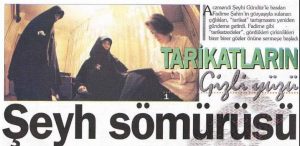
8 Ocak 1997 / Milliyet Gazetesi

28 Şubat döneminde medyanın darbeye nasıl çanak tuttuğunun en bariz örneğini Müslüm Gündüz ve Fadime Şahin olayında görebiliriz. Tarikat ve cemaatlere karşı başlatılan kara propagandanın baş aktörlerini oluşturan bu ikili, bir süre ülkenin ana gündemi haline gelmiş ve hem televizyonlarda hem de gazetelerde önemli bir yer tutmuştur. Medya kısa bir süre içerisinde bu olayı genişleterek dönemin İstanbul Belediye Başkanı olan Recep Tayyip Erdoğan’a, Ankara Belediye Başkanı Melih Gökçek’e ve İzmir Belediye Başkanı Burhan Özfatura’ya kadar uzatılmasını sağlamıştır. Bu şekilde laiklik karşıtı bir hareketin, dönemin iktidar partisindeki kişilerle de bağlantısı sağlanmış ve darbe için önemli bir “gerekçe” hazırlanmıştır. Medya darbe sonrasında da darbeyi destekler yayınlar yapmaya devam etmiştir.

Dün 28 Şubat’taki medyaya karşın bugün 15 Temmuz’daki medyanın darbeye karşı olan tutumu neredeyse taban tabana zıt bir durumda. Medya özellikle darbe girişimi esnasında demokrasiden ve demokratik yönetimden yana tavrını kesin bir şekilde ortaya koymuştur. Cumhurbaşkanı, başbakan ve bakanların canlı yayınlara bağlanarak halka hitap etmesi sağlanmış ve ayrıca doğru bilgi akışına da özen gösterilmiştir. Bu nedenle halkın sokaklara çıkıp demokrasiye sahip çıkmasında medyanın demokratik duruşunun katkısı yadsınamaz. Örneğin TRT’de okutulan bildirinin diğer kanallarda da okutulduğunu ve kanalların darbeye karşı bir tutum sergilemediklerini düşündüğümüz vakit halkın gardının henüz ilk dakikadan düşeceğinden hiç kimsenin şüphesi olmasın.

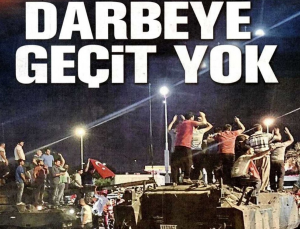
16 Temmuz 2016 / Hürriyet Gazetesi

Medyanın duruşu özellikle 16 ve 17 Temmuz gazete manşetlerinden de gayet net bir şekilde görülebilmektedir. Hemen hemen tüm gazetelerde darbe aleyhtarı manşetler yer almıştır. Kötü olana, anti-demokratik olana karşı medyanın bu ortak tavrı, halkın da demokrasiden yana ortak bir tavır takınmasında kolaylık sağlamıştır.

Medyanın anti-demokratik duruşu ile demokratik duruşunun darbelerde ne kadar önemli olduğunu bu iki darbeden görebilmek mümkündür. Fakat burada dikkat edilmesi gereken asıl nokta medya organlarının çeşitliliği ve bolluğudur. Türkiye’de medya organlarının çeşitliliği, bolluğu ve sosyal medyanın da aktif bir şekilde kullanımı, medyanın, artık eskisi gibi tek bir merkezden kontrol edilmesi kolay bir yapı olmadığını göstermektedir. Ayrıca 15 Temmuz, 20. Yüzyılda yazılan hikayelerin Türkiye gibi ülkelerde artık tutmayacağının da bir kanıtıdır.

Qoshe, 26.07.2016

Darbeyi Kim/Kimler Engelledi

Türkiye 2016’nın Temmuz ayının 15. günü bir askerî darbe girişimini geri püskürtmeyi başardı. Yazın en uzun en sıcak gecesi, farklı kesimlerin katkılarıyla, cesaretiyle kahramanlığıyla gün doğarken aydınlandı. Pek çokları için bu beklenmedik olay, aralarında siyasetçilerin, medyanın, halkın, polisin bulunduğu kesim tarafından akamete uğratıldı. Madde madde sayacak olursak

  1. Cumhurbaşkanı ve Ak Parti: Darbe girişiminin başlangıcının ülke yönetiminin en tepesinde bulunan Erdoğan’a çok zaman sonra haber verildiğini artık biliyoruz. Bu gecikme ve Erdoğan’ı yok etme teşebbüslerine rağmen önce İstanbul’a hareket etti ve telefon aracılığıyla halka seslendi. Sadece çağrı yapmakla kalmadı ve kendisinin de meydanda olacağını ilan etti. Bu çağrı henüz başlangıç aşamasında olan ve bölük pörçük haldeki direnişi arttırdı, katılım ve halkın müdahalesine liderlik etti. Darbenin bertaraf edilmesinde Başbakan Yıldırım’ın diğer bakanlar ve Ak Parti kadrolarının Devlet Bahçeli’nin ve bir süre sonra demokrasi platformuna katılan CHP’nin katkıları oldu. Ayrıca TBMM Başkanı İsmail Kahraman ve bombalar arasında mecliste hazır bulunan milletvekillerinin katkısını da anmadan geçmemeliyiz.
  2. Halk (Makul Çoğunluk): Birçok askerî darbeye maruz kalan halk bu sefer olanları evinde izlemedi. Yalın ayak, ellerinde silah olmadan çeliğe, kurşuna canları pahasına karşı koydu. Makul çoğunluk, dindar, sade, muhafazakâr kişilerden az sayıdaki demokrat solculardan oluşuyordu. Kazandaki çiftçiler, Ankara’daki işçiler, esnaf, İstanbul’da belediye çalışanları tankın, eli silahlı askerin karşına geçti. Canı pahasına mücadele etti. Şerife Boz, Danyal amca, daha adlarını sayamadığımız pek çok kişi demokrasimizi ve özgürlüğümüzü korudu. Onlarla aynı ülkede yaşamaktan gurur duyuyorum. Dindarların, “kaderci olduğu” tezi 15 Temmuz gecesi çöp tenekesine atıldı. Bu insanlar 27 Mayıs’tan 28 Şubat’tan beri ilk kez doğrudan müdahil oldu. Türkiye’nin kaderini sonsuza dek değiştirdiler. Gezi Parkı olayları ile solcu çevrelerin elinde olan “demokrasi savunuculuğu” balonunu patlattılar. İlerleyen günlerde daha iyi görülecektir ki “makul çoğunluk” tarihî bir adım atmıştır. Demokrasinin ve özgürlüğün garantisi makul çoğunluk olarak adlandırdığım isimsiz kahramanlardır. Kısaca bu gün postallar altında yaşamıyorsak bunu o gün yurdun dört bir yanında sokağa çıkanlara borçluyuz.
  3. Polis: Darbecilerin polis noktalarına, emniyet müdürlüklerine saldırması ateş altına alması boşuna değildir. Polis, darbecilere geçit vermemiş elindeki silahla onlara anladıkları dilden yanıt vermiştir. Polisin darbenin savuşturulmasında “altın hisse”ye sahip olduğunu düşünüyorum. Mısır darbesini (Temmuz 2013) hatırlayınız, polis orada darbecilerle birlikte olmuş ve acımadan halkın üzerine ateş açmıştı. Eğer burada da Polis darbeci askerle birlik olsa veya pasif kalsaydı korkarım darbe başarılı olurdu. Elinde silah olmayan halkın direnişi bir müddet sonra sona ererdi. Bütün bunlardan sayıca çok, iyi eğitim almış, elinde yer yer ağır silahların olduğu bir polis gücünün önemi iyi anlaşılmıştır.
  4. Medya: Darbenin ilk dakikalarından itibaren yayın yaparak, demokrasinin yanında yer alarak darbenin engellenmesinde başarı sağladılar. Bazı TV binaları darbeci askerler tarafından işgal edilme girişimlerine rağmen halk ile birlikte yayınlarına devam ettiler.
  5. Sosyal medya: Zaman zaman eleştirilen sosyal medya o gece, haber akışını sağladı, kollektif eylem planlarını gerçekleştirmeye aracılık etti. İnsanların etkileşimini sağlayarak duygu ve eylem birlikteliği sağladı.


Burada değinemediğimiz daha pek çok irili ufaklı faktör, adsız kahramanlar darbenin akamete uğramasında etkili oldu. Herkese şükranlarımızı sunmak bir görevdir. Umarım bu son olur, son kez bunları yaşamış oluruz.

Why do the People of Turkey Resist the Coup Attempt?

Turkey faced a brutal revolt by a group established in the military on the night of 15 July 2016. For those who have followed closely the attacks in the recent 3 years particularly starting along with an attack to the National Intelligence; Gezi Protests, and the reactions to the government’s historical resolution process with PKK in 2013, this coup attempt was not that surprising yet the brutality was really shocking. Moreover, ordinary people, especially those Anatolian people considerate about their civil liberties have already been alert to the activities, approaches of the extensions of this group not only in the civil bureaucracy but also in the civil organizations all around Turkey. Namely the members of this Gulenist group whose leader is living in Pennsylvania since 1999 is mainly responsible with the coup attempt as already confessed by the members.

Depending upon the coverage of international media in recent three years in line of a propaganda on the “Erdogan is a dictator, Turkey is going to an elective authoritarianism” not only the Western media but also the independent classical liberal, libertarian intellectuals, think tankers analyze the coup attempt totally leaving this Gulenist group established in the Turkish bureaucracy out of their analysis. On the other hand regarding earlier experiences in Turkish history, the main assumption of some of these fellows is that it is the secularist Kemalist military revolted the “Islamist” AKP government. To some extent this false and/or missing approach could be tolerated when we acknowledge that they lack the diversified knowledge based data in English on the happenings in 3 years. And the propaganda made close doors to any other late resources if it is not anti-Erdogan, but even balanced and/or reasonable.

I have three simple responses: 1. It is not the whole military, but a group whose members are mainly led by a religious masked community and cooperated with some other pro coup officers.

  1. The main reason of the coup is not because of the violations of rights of Erdogan era, on the contrary due to the discomfort of the reforms to make the civil and military bureaucracy accountable to the democratic legitimacy.
  2. The AKP constituency is a coalition of moderates, conservatives, liberals, nationalists and some leftists. The Majority of the constituency is critical with the party and supports the party with reservations, and has nothing to do with fundamentalist Islamism. As well as AKP is not an Islamist party, but a conservative religious party strictly excluding violence.

Throughout my analysis in years in various platforms on Turkey, I kept emphasizing that the biggest problem of Turkey before pushing reforms to limit the state/ government and expand liberties is the bureaucratic establishment which has been strengthened after every coup since the transformation to democracy in 1955. Competitive political arena is kept to very limited borders. Including the AKP era, bureaucratic establishment with its military, security, intelligence bureaucracy including other communication, education, public bids administration, judiciary has been the safeguards of this regime, surpassing the responsible politicians.

AKP with Erdogan challenged this bureaucracy, and tried to reform the bureaucratic system in favor of open competitive politics, furthermore via initiating democratic reforms and expanding liberties of non-Muslims, ethnic groups and Kurds, as well as freedom of speech and freedom of association. There have been reforms stepped out first ever throughout the Republican history. Via opening up markets particularly air transportation, education, and health to competition and making the bureaucracy keep in budgets changed the economic structure. The extensive infrastructure investment and freedoms opened the path for pluralism and prosperity which is hard to explain with limits to AKP and Erdogan verbal. The revival of independent entrepreneurs all around the country, the diversity of civil society are the real strength of the country as of now.

On the other hand, it has been very difficult for anyone to tell out about the secret group which has been working for about 30 years, whose members have been hiding themselves not only in the bureaucracy, but also in the civil groups, academia and media doing intelligence work everywhere collecting information about people and using it to control, to blackmail people. This is a long story. Wisely instead of going into politics with a separate political party to gain power in the state this path was chosen by this secret group. They controlled the judiciary, the police, the military out of the hierarchy and irresponsibly to the democratically elected authorities. Their members made up fake evidence, filed up cases, put people in jail who had not obeyed them, who had not given them money, and who had prevented them to illegally operate. Prominent businessmen, media, many MPs have been afraid of them not from Erdogan. Ordinary people had known them very well. This is why ordinary citizens supported AKP in the recent elections in spite of its fallacies, since AKP has been a civil political party which did not engage in deep bureaucratic state, but attempted to change it. To change means making the irresponsible bureaucracy accountable to political power, which can make mistakes and subject to critiques. There are various other English resources which I invite to follow without any prejudice on incidents and details other than The Economist, the BBC, the CNN international, Fox News, the Independent, the Guardian, the New York Times.

Meanwhile Turkey has a very strict civil officer code (Article 657) which makes it almost impossible to prosecute when one is engaged in unlawful acts. This is the main reason of announcing emergency state. AKP government has been so late in finding out and filing cases against those in the bureaucracy who are acting irresponsibly, to give lightest examples such as giving the questions of the central exams to become civil officers to their members; preventing those who are not their hidden members in the academia to be appointed to their PHd degrees, professorship cadres; filing up unfair prosecution cases. Recently, and particularly after the coup they have been more disclosed and being criticized openly and all violations are being told, they have lost their veil of as if it is a civil charity organization. Their group in the military initiated the killings, bombings of civil people, the Parliament, the Security Administration, the National Intelligence in the coup attempt on July 15.

To say “to sound naively” and broadly, considering the international voice against Erdogan, and those some inside Turkey, the coup plotters considered they could have been successful. However, big civil masses did not let this. Including the opposition parties and the mainstream media, and businessmen there is widely resistance against the coup attempt. The main opposition party CHP organized a rally against the coup attempt and AKP supporters and others also joined on 24 July in Istanbul.

With regards to the act in the universities, the centralized bureaucracy for universities administration has already been problematic with extensive administrative powers. The recent decision of making deans resign has nothing to do with academic freedom, freedom of speech, this is to deal with the illegal, unfair administrative operations of the deans, and members of this group hiding themselves. But we have to watch out the procedure in the coming days. The emergency state decision shall not reflect upon civil life, but only in the bureaucracy to lately inspect all unlawful acts which violated the freedoms of every citizen. We shall watch the proceedings in details.

Recent developments not only provide an opportunity but also prove hope for reconciliation and cooperation among different political actors for a new constitution and other reforms for a free, plural political and economical system.

The awful sad coup attempt took away many valuable lives, that is a wordless deep sorrow. One can’t imagine the terrible consequences if the attempt was successful. This fatal attempt seems to urge to go to zero point with the bureaucracy and strengthen the institutions of liberal democracy in Turkey via constructing a transparent responsible state organization under rule of law where citizens prove a closer watch.

There need to be some final notes taken on the support of classical liberals to the Turkish government. This is a reserved but principled support against the anonymous bureaucratic powerful actors to the democratically elected legitimacy. Nonetheless to be fair the present governing party has shown the highest open democratic performance to challenge the bureaucratic powers, reform the system in favor of liberties and listened to civil actors to revise its position, particularly Erdogan.

So in terms of keeping in legitimate fields of competitive democracy, liberals around the Association for Liberal Thinking already have continued to constructively criticize the government to make reforms, constructively criticize other political actors and opposition considering that they are important for strengthening liberal democracy. When doing this liberals of ALT, praising the legitimate borders of open competition in politics, already kept away from active politics and political privileges; and valued civil society and free markets as the fundamental drivers of civilization.

Since this secret organization worked very well for the past 30 years or more to invest in lobbying, educating their members, they have been more powerful in extending their preferred messages outside of Turkey. Meantime, ordinary citizens who had deprived for a long time of their individual liberties, opportunities to prosper and educate their kids, join in social life, have just opened up their eyes recently and claimed for their liberties. And international media is mainly connected with the members of this abovementioned group along with others of secularist elites. That is why the lacking analysis of classical liberal /libertarian fellow friends might be tolerated abroad. There is already a lot to invest in liberal pluralist ideas within the country which we failed to work for outside until recently.

The following remark is that anyone telling about Turkey in the recent years excluding the existence of this secret organization in the bureaucracy could hardly convince classical liberals such as the members of ALT about the consistency of his analysis on the state of freedom in Turkey.

What the fellows at the Association for Liberal Thinking are trying to do is to invest in individuals to recognize and learn the ideas of free society acting with their free will, and to discuss with them when they oppose openly. We have always valued the free speech, free discussion at our programs so as to let the individuals to develop their analytical thinking and contribute to the rich intellectual tradition of civilization based upon limited government, civil society and free enterprise in Turkey.

Finally to have hopes for near future, our fundamental observation for years is that individuals eager to learn and considerate about liberal ideas are coming mainly from smaller cities away from privileged elites, as there are few exceptions. Just like Hayek addressed wisely The intellectual revival of liberalism is already under way in many parts of the world”. We turn our eyes to the common sense of ordinary citizens minding the value of life, liberty and property and being alert to the real attacks from central powers.  And they have just started engaging with the world to tell their stories, to contribute to the struggle for free and peaceful societies.

Ozlem Caglar Yilmaz,

General Coordinator of Association for Liberal Thinking

Asıl mesele, hukuk içinde kalmak

Normal hukuk düzeninin hükümleri ile üstesinden gelemedikleri bir tehdit veya tehlike ile yüz yüze geldiklerinde devletler, özel yönetim şekillerine müracaat ederler. Olağanüstü Hal (OHAL) de bunlardan biridir. Bu anlamda o bir hukuksuzluk hali ya da hukukun yokluğu değildir. Aksine, dayanağını Anayasada bulan olağanüstü bir hukuk rejimidir.

15 Temmuz kalkışmasının Türkiye’de olağanüstü bir durum yarattığı tartışılmaz. Gayri-meşru ve gayri-ahlaki kalkışma, halkın demokratik iradesine çarptı ve bastırıldı. Akabinde devlet başlıca üç hedefi önüne koydu:

  • Darbe tehdidini tümüyle bertaraf etmek;
  • Darbenin askeri ve sivil bürokrasi içindeki uzantılarını tespit edip bunları etkisizleştirmek;
  • Darbenin faili olan Gülen Cemaati mensuplarından devleti temizlemek.

Olağanüstü hal ilanı bu vasatta alındı. OHAL’in iki temel gayeye matuf olduğu söylenebilir:

  • Mevzu bahis darbe tehdit ve tehlikesini ortadan kaldırmak için geniş yetkiler tanınan idarenin etkili ve hızlı hareket edebilmesini sağlamak;
  • Bu süreçte alınacak kararları ve hayata geçirilen uygulamaları hukuki tabana oturtmak.

Direkten dönmek

OHAL, kulağa hoş gelen bir kavram değil. En son 2002’de kaldırılmış ve memleketin bir bölümü uzun bir aradan sonra ilk kez olağan bir havayı teneffüs etme imkânı bulmuştu. Peki, 14 yıl sonra ve bu sefer ülkenin tamamında olağanüstü hal yoluna gidilmesi içte ve dışta nasıl yankılanır?

OHAL, iç kamuoyunda geniş bir sosyolojik meşruiyete sahip. Zira Türkiye, deyim yerindeyse, direkten döndü. Derin bir siyasi ve hukuki yıkımdan son anda yakasını sıyırdı. Tedavisi yıllar alacak ölümcül bir darbeden kıl payı kurtuldu. Karşılaştıkları vahşet insanları sarstı. Toplum, sınırsız bir kötülük potansiyeli bulunan ve devleti ağ gibi sardıkları ortaya çıkan darbeci çete ile baş edebilmek için yönetime olağanüstü yetkiler verilemesini doğal karşıladı. Bunu maruz kaldığı melanetten çıkmanın bir bedeli olarak okudu.

Uluslararası kamuoyuna gelince; burada ilk söylenmesi gereken uluslararası hukukun da OHAL’e cevaz verdiğidir. Misalen AİHS’nin 15. maddesi ile BM Medeni ve Siyasi Haklar Sözleşmesi’nin 4. maddesinde OHAL’e ilişkin düzenlemeler bulunur. Dolayısıyla her devlet gerek gördüğünde, iç ve uluslararası hukukun tanıdığı bu olanaktan istifade ederek OHAL’e başvurur.

Nitekim son dönmelerde bunun örneklerine sıkça rastlar olduk. Meydana gelen terör olayları nedeniyle birkaç ülke olağanüstü tedbirler aldı. Mesela Fransa, Paris saldırılarından sonra ilan ettiği OHAL’i Nice’deki saldırılardan sonra altı ay daha uzattı. Ferguson ve Baltimore’daki siyahîlerin büyük çaplı protestoları ve gösterileri karşısında Amerika, gösterileri bastırmak ve yayılmasını engellemek amacıyla olağanüstü halde karar kıldı. Münih’teki alışveriş merkezi saldırısından hemen sonra Almanya da OHAL dedi ve kamu düzeninin temini maksadıyla birçok tedbir uyguladı.

15 Temmuz gecesi Türkiye’nin yaşadığı felaket, bu ülkelerin başına gelenle kıyas kabul etmez. Anılan ülkelerden boyutu, çapı ve genişliği itibariyle çok daha yıkıcı bir tehdide ve tehlikeye maruz kaldı Türkiye. Bu itibarla Türkiye’nin kendisine yönelik tehdidi savuşturması ve açılan yaraları sarması için OHAL ilan etmesi tabiidir. Eğer söz konusu ülkeler benzer bir saldırıya uğrasalardı -örneğin parlamentoları ve cumhurbaşkanlığı/başkanlık sarayları bombalansa, başbakanlarına ve devlet başkanlarına suikast teşebbüsünde bulunulsaydı- Türkiye’yi kat be kat aşan sert önlemler alırlardı.

Hukuka uygunluk

Yani OHAL ilanı üzerinden Türkiye eleştirilemez. Diğer devletler için hak olan, Türkiye için de haktır. Türkiye’nin dikkat etmesi gereken husus, OHAL’i de hukuka uygun bir şekilde yürütmektir. OHAL’de olağanüstü hal makamlarının kararlarına karşı iptal davası açılabilir. Yine bu makamlarının kararlarından kaynaklanan zararların giderilmesi için “tam yargı davası” yoluna da gidilebilir.

Lakin yargısal denetimden daha öncelikli olan, siyasi iradenin OHAL’in yürütülmesine rengini verecek olan davranış kodlarıdır. Burada öncelikli olarak iki noktaya odaklanmak lazımdır:

İlki, devlet ve hükümetin OHAL olsa da -normal olana göre sınırlandırılmış ve azaltılmış- hukuka riayet mükellefiyetidir. Siyasi iktidar, kamu yetkisini kullanan tüm ajanlarının hukuki sınırlar içinde kalmasını sağlamakla yükümlüdür. Bu bağlamda uygulamaları hukuka uygunluk noktasında izlemeli, uygulayıcıları uyarmalı ve hukuk alanının dışına çıkanlara gerekli müeyyideleri uygulamalıdır.

Bilhassa, darbe ithamı ile tutulanların herhangi bir şekilde işkence ve kötü muamele görmelerinin önüne geçilmelidir. Bu, her şeyin ötesinde, ahlaki ve hukuki olarak doğru olduğu kadar, siyasi olarak da doğru olandır. Çünkü darbe soruşturması kapsamında çok önemli ifadeler veriliyor, itiraflar yapılıyor. Darbenin karanlıkta kalan noktalarının aydınlığa kavuşturulması ve sorumluların belirlenmesi bakımından da bunlar büyük bir önem taşıyor. Bunların sıhhatine halel getirecek her davranış, darbe ile mücadeleyi sekteye uğratır. İfadelerin zor altında verildiğine, itirafların baskıyla alındığına karine teşkil ederek darbecilere yarar; Kötü muamele, hem darbenin bağlantılarının çökertilmesini ve suçlularının cezalandırılmasını güçleştirir, hem de ileride Türkiye’nin başını ağrıtır.

Puslu havayı seven kurtlar

Halka böyle ağır bir zulmü reva görenlerin, hak ettikleri cezaya çarptırılmaları adaletin gereği. Ancak suçluların tespiti sürecinde titiz bir çalışma yürütülmesi, kuyumcu terazisi gibi hassas olunması şart.

Buhranlı bir dönemden geçiyoruz ve bu birçok sakıncayı da beraberinde getiriyor. Puslu havadan yararlanmak isteyen çok sayıda kurt gündemi esir alabilir böyle zamanlarda. Olur-olmaz herkesi darbeci sınıfına koyabilecek bir insan grubu var bu ülkede. İkbal ve rant elde etmek veya kendi kariyerleri için tehdit oluşturduğunu düşündükleri masum insanları elemine etmek isteyeceklerini tahmin etmek de güç değil.

Devlet bu konuda çok dikkatli ve hassas olmalı. Mesela, darbe kalkışmasının ertesinde çok sayıda kişiye kamu görevinden el çektirildi, kimileri de kamuda çalışma hakkından mahrum edildi. Elbette, darbeyle bağlantısı olanlar bu tür müeyyidelere tabi tutulur. Bunda sorun yok. Fakat devlet bu tedbirleri alırken hangi kriterlere dayandığını şeffaf bir biçimde ortaya koymalı. Şüphe bulutları ancak böyle dağıtılabilir, kötü niyetlilere ancak böyle set çekilebilir.

Türkiye yakın zamanda dehşet verici bir girişimle sarsıldı. Darbe davaları, tarihin akışını değiştirecek ölçüde mühimdi. Ne var ki ilgili-ilgisiz herkesin aynı torbaya konması ve davaya karıştırılması, davaları sulandırdı. Kurunun yanında yaşın da yandığı görüldüğünde, davalar itibar kaybına uğradı, gözden düştü. Kimsenin davalara itimadı kalmadı ve gerçek darbecileri teşhis edip cezalandırmak da hayal oldu.

Bugün aynı hataya tekrar düşmemek mümkün. Hukuka uygunluğun hayatiyetini hatırlatmak, darbecilerin ekmeğine yağ sürmek veya darbe ile mücadele edenlerin azmini kırmak olarak yorumlanmamalı. Çünkü hukuk, bazılarının sandığı gibi, ayağımıza dolanan bir ip, şimdilik bir kenara bırakılması gereken bir lüks ya da hedefe ulaşmayı imkânsız kılacak bir zaaf değil. Tersine darbecilere karşı etkili mücadele ancak onun içinde kalınarak verilebilir.

Serbestiyet, 26.07.2016

The Coup Leader Must Be Held Accountable – İbrahim Kalın

On July 15, a rogue faction within Turkey’s military attempted to suspend the Constitution, impose martial law and enforce a nationwide curfew. As troops and tanks blocked traffic crossing from Asia to Europe over the Bosporus Bridge in Istanbul, a number of government buildings including the Parliament, the Presidential Palace and the intelligence headquarters were heavily assaulted. During a series of coordinated attacks, more than 240 civilians and police officers in Istanbul and Ankara were shot by snipers, run over by tanks, shelled by assault helicopters and killed by bombs dropped from hijacked aircraft. Meanwhile, the rogue faction seized a public broadcaster and held an anchorwoman at gunpoint to announce that they were now in charge.

Prime Minister Binali Yildirim called the coup illegal and, in consultation with President Recep Tayyip Erdogan, ordered the police and other security forces to stop the coup plotters. Soon afterward, President Erdogan appeared on television to call on the people to resist the power grab. When Mr. Erdogan’s message was aired live on CNNTurk, a private TV channel, the junta soldiers invaded its premises as well. Millions heard the call and defied the rebels. Opposition leaders also deplored the coup and called for resistance.

In the meantime, an elite military squad was sent to the hotel on the Turkish Riviera where President Erdogan was vacationing, to kill him and his entire family. Having survived the assassination attempt, Mr. Erdogan escaped on his official jet, which reached Istanbul safely after the pilot deceived rogue F-16s patrolling the airspace.

In the wake of the bloody coup attempt, the government, acting on the recommendations of civilian and military leaders, exercised its constitutional mandate to declare a three-month state of emergency. Adopted by countries like France and Belgium in response to terror attacks, this measure is intended to expedite the legislative process and provide the authorities with legal tools necessary to bring those responsible to justice.

Several thousand military officers and their accomplices in law enforcement and the judiciary have been suspended or arrested for having links to the coup. Their removal from public posts makes the Turkish government stronger and more transparent. At least 1,200 rank-and-file soldiers, who weren’t charged, have already been released from custody. A team of 70 prosecutors is investigating the case. The claim that this was a fake coup is no more credible than the laughable claim that the 9/11 attacks were orchestrated by the United States.

Testimony and evidence obtained from coup plotters point to Fethullah Gulen as the leader of the coup attempt, which was planned and staged by his followers within the army. Levent Turkkan, aide-de-camp to the chief of staff for Turkish armed forces, Gen. Hulusi Akar, confessed to being a member of the Gulenist group after he was arrested, adding that he executed orders from his Gulenist superiors. Generals leading the coup also urged General Akar to speak to Fethullah Gulen, who runs a covert empire from his mansion in rural Pennsylvania, hoping to persuade him to join in their rebellion, according to General Akar.

Since the 1980s, the Gulenists, a religious cult whose members present themselves as peaceful educators, have always had a dark side. They have infiltrated the Turkish judiciary and security forces and manipulated the system to their advantage. They also fabricated evidence, engaged in illegal wiretapping and leaked government documents to smear their opponents.

They own a number of charter schools and companies across America and have been accused of engaging in financial fraud and violating immigration and campaign finance laws.

The United States should extradite Fethullah Gulen, a Turkish citizen, to Turkey, as is allowed under an existing treaty. Turkey has already provided a number of legal documents to American authorities and will send more as further evidence is collected. The United States should not let this man exploit its laws to avoid facing a fair and legitimate accounting in Turkey.

Fethullah Gulen’s claim that he has had nothing to do with this coup attempt is as credible as his claim that he has had nothing to do with hundreds of Gulenist schools, banks, companies and media outlets that operate under his direct orders. A due legal process will establish his role in this failed rebellion. It does not make sense for any country to condemn the coup without taking action against the lead putschist.

Today, the people of Turkey are more united than at any time in recent history. In any democracy, citizens are bound to disagree. But our nation’s response to the July 15 assault proved that democracy, freedom and the rule of law are nonnegotiable in Turkey. As the Turkish people mourn the dead, nurture the wounded and take pride in what we accomplished together, they also demand justice, closure and reassurances that never again shall we witness such a crisis.

The New York Times, 24.07.2016

(6) For those who do not understand – Adam McConnel

As someone who lived through the night of 15-16 July, there are two aspects of the situation that I find disturbing.  The first is the event itself, which was truly terrifying.  The second has been the attitude of journalists and other intellectual commentators both inside Turkey and abroad. As the coup attempt emerged and then failed, reporters and pundits struggled to say something coherent for their viewers and readers.  The situation inside Turkey was better because the large majority of commentators had (and have) a better grip on the political realities of the situation, but abroad the outlook was grim.  This and the following articles will address those journalists’ and commentators’ massive failure to perform their job properly.

A number of extremely worrying narratives emerged even while the violence was continuing early on Saturday, 16th July.  In a general way, they were meant to insult or to negatively impact on the public perception of two main actors.  The main target was Turkey’s President Tayyip Erdoğan; the secondary, but inherently connected actor was the Turkish citizens themselves.  For several years an international campaign has been waged to portray the Turkish leader in as bad a light as possible for Western media consumers.  But because Erdoğan has achieved repeated and spectacular electoral successes over the past fifteen years, the insults aimed at Erdoğan have between the lines also been aimed at the Turkish people.  If he is the supposed dictator, then they are the brainwashed, hideous rabble that voted him there (1).

So all the nastiness that began to come out into the open even as (or because) the junta’s failure unfolded should be understood in that light. Without exception these two objectives went hand in hand: to cast (not the coup but) Erdoğan as the true evil, and the Turkish citizens who resisted and overcame the coup as standing (not for democracy but) a stereotypical Muslim fanaticism.  A related sub-theme was the claim that the Turkish people did not have that much to do with defeating the coup. They began to take to the streets to to resist, it has been alleged, not on their own but only after President Erdoğan called them out. This is patently false, and is intended to minimize or deprecate the people’s level of consciousness, and thereby also the popular nature of the resistance to the junta. It suits some people to create the impression that the Turkish masses are some sort of crazed mob under Erdoğan’s thumb, without any will, mind or purpose of their own.

In reality, the moment the tanks and troops appeared on the streets, Turkish citizens also came out and began to resist them.  This was evident on television as it happened.  At Atatürk Airport, footage taken by citizens on the spot (2) clearly shows how, as the tanks moved in and soldiers filed out of APCs, citizens began to harangue and then to push and shove the soldiers, who then responded by firing their weapons in the air.  When Erdoğan appeared on CNN Türk via a cell phone feed, resistance had been underway for at least two hours at least.  The president simply provided more focus, resolve, and morale for the resistance.

Another, more extreme variation on the same theme, later put into words by one of Turkey’s prominent leftist intellectuals (3), was that the coup had already failed by the time that Erdoğan appeared, and that the Turkish people went out on the streets only when they saw that the coup had failed.  It seems that this old-school member of Turkey’s elite intelligentsia has felt uneasy about the active commitment and participation demonstrated by the masses in defending the legitimacy of the elected government against a military intervention. He has condemned the coup itself, which is good, but at the same time he has been unable to refrain from insinuating that this is not really a mass to his taste. Turkish citizens, he would have us believe, moved and acted  only when they saw which way the wind was blowing. It is a good illustration of the moral (amoral?!) confusion into which a lot of old left intellectuals have fallen.

But worst of all have been the conspiracy theories that appeared with lightning speed while the struggle was still going on in the streets.  The central idea is that the coup was “staged” in order for President Erdoğan to assert greater personal control over state and society.  The equivalent, of course, are claims that the George W. Bush administration somehow “staged” or “enabled” the Al Qaeda’s 9/11 (2001) attacks.  Both claims are not only preposterous, but also display a similar lack of ethics and respect for human life.

Still, in the aftermath of the 2001 attacks, no Western press sources that I know of attached any credence to such absurdities.  In contrast, they have somehow been able to bring themselves to believe that the coup attempt in Turkey may actually have been a “fake” or “hoax” launched by Erdoğan, to vest this notion with a degree of legitimacy, and to pass it on to their customers (4).

Even that was not sufficient.  Some Western media sources then took the conspiracy theory a step further by beginning to draw analogies between the abortive coup and the Reichstag fire of 27 February 1933 (5). The implication was that the coup and its defeat were going to benefit Erdoğan in the same way that Marinus van der Lubbe’s arson had benefited the Nazis. Between the lines, it wasn’t only the two acts or events that were being compared; very clearly President Erdoğan and the entire AKP leadership have been likened to Hitler and his Nazis.Yes, that’s the level of hysteria this entire situation has reached.  I should add that resorting to such facile Hitler/Nazi comparisons is normally regarded as something to refrain from in Western journalism and scholarship. It is taken as a sign of intellectual laziness and sloppy extremism. Though not, it seems, when it comes to the AKP.

More broadly speaking, in the Western press there is a nearly uniform lack of ability to think clearly and analytically about Turkey.  A major part of it is simply a lack of knowledge, current information, and language skills.  Journalists and academics who have no business writing on Turkish issues, because they have little or no real information about the country, find it personally permissible to do so.  The media sources that they provide content for also see no problem in acting as enablers which then also benefit from the clicks.  But there is also a much darker side to the situation.  Visceral feelings of fear, prejudice, bigotry or hatred also come into play to prevent the Western press from writing or reporting objectively on Turkey — and not only on Turkey but on the Muslim world in general.

Of course, the hypocritical stance adopted by various Western governments also facilitates and interacts with this behavior.  Only hours after the Turkish government rightfully declared a state of emergency (having deliberated the step for several days, going to the necessary state institutions, namely the National Security Council (MGK) and the Council of Ministers, and then having had it finally approved by parliament), the German Foreign Ministry took the astonishing step of criticizing the Turkish government for the action. In fact, Frank-Walter Steinmeier’s comments reflected how ignorant he is about Turkish affairs (6).  The reason why this statement is so shocking is that Germany’s neighbor, France, has been under a state of emergency since the extremist attacks in November 2015, and has just extended (as of last week) that state of emergency for another six months.  But has anyone seen the German Foreign Ministry urging France to respect the rule of law and end their state of emergency as soon as possible?

Then two days later, in a case of most horrific and grotesque irony, an assailant in Germany’s Munich killed a number of civilians on the street, causing the German state to declare a state of emergency in the city.  Whereas police presence on the streets in Istanbul has not increased in any way (because the state of emergency in Turkey is largely intended to expedite bureaucratic and judicial procedures), Munich now seems to be overflowing with police officers.

NOTES

(1) https://www.theguardian.com/commentisfree/2016/jul/17/turkey-defeated-coup-military-turkish-army.

(2) https://www.youtube.com/watch?v=6oLyK_5Ax10&feature=youtu.be.

(3) http://t24.com.tr/yazarlar/murat-belge/olgular-ve-mugalata,15061.

(4) http://www.independent.co.uk/news/world/turkey-coup-conspiracy-theory-erdogan-military-gift-from-god-soldiers-istanbul-a7140516.html; http://www.al-monitor.com/pulse/originals/2016/07/turkey-military-coup-attempt-more-questions-than-answers.html; https://next.ft.com/content/044f7ed8-4dbb-11e6-88c5-db83e98a590a#axzz4FOcC34gX; http://www.nytimes.com/2016/07/18/opinion/turkeys-coup-that-wasnt.html?_r=0.  My next article will be devoted to analyzing Roger Cohen’s NYT column on the coup.

(5) http://www.usatoday.com/story/opinion/2016/07/20/turkey-coup-islam-erdogan-sharia-sultan-caliphate-crackdown-democracy-column/87344676/;http://observer.com/2016/07/turkeys-weekend-of-the-long-knives/.

(6) http://www.reuters.com/article/us-turkey-security-germany-idUSKCN10102W.

Serbestiyet, 26.07.2016

(5) The heroic citizens of Turkey – Adam McConnel

I did not really sleep after laying down around 06:30 (16th July).  A mixture of fear, tension, and hyper-alertness kept me awake.  So at about 08:00 I moved back to the TV after listening for what might be going on outside.  I could still hear gunfire, but it was further away.

On television were scenes of soldiers on the bridge surrendering and marching towards the waiting police in pairs, with their hands over their heads.  Throughout the night, citizens had confronted the junta’s soldiers on both of the Bosphorus bridges.  Those soldiers had fired on them, cutting them down in cold blood.  One of the tanks had even fired its cannon at them.  On one of the bridges, if you can imagine, there was even a sniper who had taken the lift to the top of one of the main towers, again firing down on unarmed civilians (before he in turn was shot down by a police sniper).

Around the same time reports emerged of clashes in downtown Istanbul, very close to Taksim.  There, junta soldiers had occupied the TRT building at Harbiye, and shooting erupted between them and the police. A TV channels had reporters on the scene, so the footage was live.  Fortunately that continued for only about twenty minutes as the troops inside the TRT building quickly surrendered. The on-site camera showed the soldiers lying on the ground with their hands behind their heads, being stripped of their weapons.

On the bridges, soldiers continuing to file out towards the police were being stripped of not only their weapons but also their equipment and uniforms.  Later, atrocious rumors were purposefully spread on social media claiming that some of the soldiers on the bridges had been lynched. On television we did see some citizens kicking soldiers who had surrendered. Even this much, of course, is inexcusable. At the same time, those soldiers had spent the night killing unarmed citizens, and the crowd was furious. Furthermore, whatever police were present did not have entire control over the situation.  Out there were thousands of people, all enraged by the coup attempt as well as the ruthless murder of their fellow-citizens.  The situation could have been much worse, but under the circumstances citizens actually behaved with remarkable restraint.  Subsequently, all those rumors of massacres of surrendering soldiers turned out to have been  completely false, accompanied as they were by montage pictures from entirely different conflicts or even road accidents.

Because of what took place on the Bosphorus bridges during the coup attempt, the bridges have become a symbol of  resistance.  Both bridges have long been an important part of Istanbul’s persona, and both bridges were constructed by populist, popular politicians (the first bridge under Süleyman Demirel, the second under Turgut Özal).  The appearance of soldiers on the bridges is how an entire nation realized what was afoot, and the numbers of people killed there were larger than in most other places.  Yes, President Erdoğan’s actions that night were obviously important, but in the coming years the bridges will survive as the primary image and symbol associated with the coup and how it was overcome.

I want to devote the rest of this article to the Turkish people, who were the true heroes.  What the citizens of Turkey did on the night of 15-16 July 2016 should be remembered along with other acts of heroic mass defiance and self-sacrifice in the face of murderous force exercised by the state:  Tiananmen.  Prague.  Rabia Square.  This selfless bravery in defense of their democratic will and rights cannot be overstated.  Turkish citizens literally gave up their lives for democracy, and more than 250 were killed. People all over the world should know this:  Turkish citizens have been heroes.

The peoples of Turkey have been subjected to the authoritarian Westernization projects of Ottoman and Turkish Republican state elites since the 19th century Tanzimat Era.  Starting then, the modernization of Turkish society, usually according to concepts and models from Western Europe (especially France, later also Germany), has been carried out by a growing military-bureaucratic establishment in a top-down fashion, with little input from the citizens themselves.  Until the end of the Ottoman Empire that was largely an issue of political policy and preferences on the part of bureaucrats.  But after the foundation of the Turkish Republic, direct state violence began to accompany the effort to modernize.

In the mid-1920s, radical reform projects went hand in hand with capital punishment for anyone who dared oppose them even non-violently. The most infamous example may be the 1925 Hat Law (Şapka Kanunu), after the implementation of which dozens of citizens who refused to comply were executed.  Later, even pressure on the various elements of Turkish society to conform to the new cultural norms also began to be accompanied by state violence.  These reforms were rationalized as “for the people, despite the people” (halk için halka rağmen).

Eventually, democratic alternatives for the Turkish people did emerge, but only after decades of oppression.  Even then, when they began to threaten the monopoly of control established by the Turkish military and its allies in the state bureaucracy and intelligentsia, those civilian, democratic alternatives were snuffed out repeatedly by more exercises of direct state violence.  Coup followed coup at ten-year intervals (1960, 1971, 1980).  Every takeover was accompanied by harsh repression and violence.  But as Turkish society changed, as the economy developed, as the life opportunities of citizens improved and they gained better education, and Turkey moved from a rural to an urban society, fundamental democratic change became more and more inevitable.

Westerners may have trouble recognizing or admitting it, but the people on the streets last Friday were the forces of democracy.  What the Turkish people did on the night of 15-16 July 2016 should be understood in that framework.  The Turkish people will no longer tolerate the Turkish state deploying massive anti-democratic force against them.  They will step in front of tanks, and armored cars, and soldiers with guns, and even in front of F-16s and Sikorsky helicopters in order to stand up for their rights.  Turkish democracy is alive and well in the hands of the Turkish people.

Serbestiyet, 26.07.2016

What we experienced Friday night (4) – Adam McConnel

After 03:00 and President Erdoğan’s arrival in Istanbul, I continued to flip through the channels, watching the various scenes unfold.  After this point it was clear that the coup would not succeed — despite what was being reported internationally.  The failure of the international press on this count is all the more notable because the only thing they had to do was to get someone who knows Turkish to sit and monitor the Turkish TV channels.  Essentially, all the major Turkish channels also have live internet feeds, and the internet continued to function throughout the night.  There was no excuse for maintaining a “we don’t know what’s happening” or “it looks like régime change in Turkey” narrative anytime past 02:00 Turkish Standard Time (23:00 GMT, 15th July).

In the following hours, watching the continuing events meant watching the junta’s attempts to simply create more damage, and to kill and terrorize more people.  On the Bosphorus bridges, people were being shot in cold blood, and one of the tanks on the bridges appears to have fired its cannon at the protestors.  From our window gunfire was audible, but it seemed less close and less frequent.  Once or twice I remember hearing jets, but only at a distance.  I don’t remember hearing the helicopters again.

From Ankara, coverage was focused on the damage done to the National Assembly as well as the ongoing standoffs in several government buildings.  The extent of the junta’s plans became clear as reports from various places in Ankara and Istanbul filtered in, plus information about all the activity in the air.  The involvement of the Turkish Air Force was disconcerting, and one item stuck in the back of my mind.  I don’t remember when we received confirmation, but at some point during the hours after 03:30 we learned that Air Force personnel far away from Ankara had been involved in the junta.  And then the news that I really dreaded:  there were junta officers at İncirlik AFB.

My guess is that in the past couple of days more people have become aware of just why that item was so vital.  Yes, İncirlik is important to U.S. operations in Syria against ISIS, but that is a secondary issue.  What is more important is that a number of U.S. nuclear weapons (as many as forty hydrogen bombs, which is said to around one-third of what is at NATO’s disposal) are stored at İncirlik.

I don’t know (no outsider can easily know) the details of how those weapons are kept, and whether it might be possible for some rogue officers to capture one or more and then somehow use (or threaten to use) them.  But they were there in İncirlik and they also had delivery capacity because of the jets under their command.  There was no way of knowing what might happen.  And in those hours, it was clear that the junta officers were not only set on death and destruction, but also not quite sane in terms of their mental outlook. They were capable of anything.

On television we were now seeing footage of junta troops — many of them obviously rural youth doing their mandatory military service — being rounded up, arrested, and frog-marched into vehicles or police stations.  Here’s an item that I haven’t seen much comment on:  the police were a key component of suppressing this coup attempt.  This is remarkable because only three years ago the Turkish police were known to be largely under the control of Fethullah Gülen’s adherents.  In the wake of the December 2013 corruption investigations launched by Gülen’s minions in the police and the judiciary, the police were at least partially purged of Gülenist influence.  The judiciary, on the other hand, was not, as judges and prosecutors were largely shuffled in large numbers, though not fired, in an attempt to hinder their contact networks.

In the past two years the professional quality of the Turkish police, on the street level, has increased.  They both resemble and conduct themselves much more in accordance with what we would expect from trained career officers.  However, that is only my impression from what I keep observing out on the street. But what the police did, and how they did it, last Friday and subsequently, have confirmed my impression.  The formerly solidly Gülenist police were now a major force preventing Gülen’s troops from asserting control.  This was clearly and easily observable from the coverage flowing past on various channels.  And most of the police personnel that I saw on television were quite young, suggesting that many of them may have been recruited and trained over the past three years or so.

It was around 06:30 in the morning when President Erdoğan spoke to a massive crowd at Atatürk Airport.  I assume that by that time the skies were considered safe enough for him to emerge from the building. Clearly the coup had failed, so I tried to lie down to sleep.  But I cannot say that I was able to do so.  Instead, intense fear kept me awake (I wouldn’t be able to sleep until sometime early Sunday morning).  From time to time gunfire could still be heard from the direction of the Bosphorus, and I kept expecting once more to hear jets or explosions.  I never wanted to be able to say it, but in some very small way, insignificant in comparison, I began to understand a bit of what the Syrian refugees in Turkey have probably experienced in their own country.  The trauma is dreadful. May they as well as all others never again experience the same in this country.

Serbestiyet, 22.07.2016